
Written in the Soil; How Ancient Farmers Along the Silk Road Built a Sustainable Landscape
Help us uncover how ancient farmers along the Silk Road created a sustainable agricultural landscape that thrived for centuries. By supporting our expedition to Kyrgyzstan, you will help us recover a remarkable story that is still written in the soil.

My project is special because it search history from soil
We are returning to the ancient archaeological landscape of Ravat in Kyrgyzstan to investigate one of the best-preserved irrigation systems along the Silk Road. With your support, our international team will document the landscape, collect soil samples and uncover how ancient farmers managed water and maintained productive agriculture for more than 1,500 years.
Most archaeological projects focus on settlements or monuments. Our research is different because it investigates the entire agricultural landscape—its fields, irrigation canals and soils. The answers we seek are not preserved in written records but in the soil itself, where microscopic traces reveal centuries of cultivation, irrigation and environmental adaptation.
This expedition builds on several years of research carried out together with our Kyrgyz colleagues. It also provides practical field training for young archaeologists and strengthens long-term scientific collaboration between researchers from Kyrgyzstan and Europe.
Understanding how past societies successfully managed limited water resources has relevance far beyond archaeology. As climate change and sustainable land use become global challenges, Ravat offers a rare opportunity to learn from a landscape where people farmed successfully for centuries. By supporting this expedition, you help us recover and preserve this unique archive before it is gradually lost through erosion and modern land use.

Landscape of Ravat I. 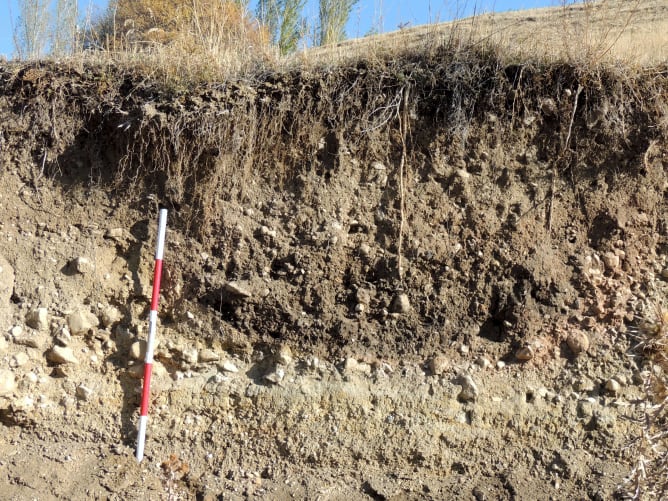
owen hidden under surface 
Central tepe of prehistoric field system 
channels, roads, walls, fields... 
burial mounds from turkic era 
Dreaming archaeologist above prehistoric landscape
This is what I need backing for.
Every contribution to this campaign will directly support the fieldwork that makes our research possible.
The funds raised through Wemakeit will cover transportation to and within the Ravat archaeological landscape, accommodation and field logistics for the research team, the participation of our Kyrgyz colleagues, and field scholarships for two archaeology students from Kyrgyzstan. The scientific expertise, laboratory facilities and analytical equipment are already provided by our collaborating institutions, meaning that every contribution goes directly toward collecting the evidence that will allow us to answer our research questions.
Throughout the expedition, our supporters will be able to follow the project through regular photographs, short videos and field updates, sharing both the scientific discoveries and everyday life of an archaeological expedition in the foothills of the Tien Shan Mountains.
To thank our supporters, we have prepared a range of rewards that bring them closer to the research. These include digital expedition diaries, signed photographs from the field, exclusive online presentations about our discoveries, and limited-edition fine art prints of the remarkable Ravat landscape.
One of our most special rewards is «Adopt a Soil Sample.» Supporters will symbolically sponsor one of the undisturbed soil samples collected during the expedition. They will receive the exact location where it was collected, photographs of the sampling process, an explanation of why the sample was selected, and, once the laboratory analyses are complete, a personal update describing what it revealed about ancient farming and irrigation. It is a unique opportunity to follow the scientific journey of a single piece of soil—from the archaeological landscape to new knowledge about the past.
By supporting this campaign, you become part of the expedition itself and help transform traces preserved beneath the fields of Ravat into new discoveries about how people successfully lived with limited water more than fifteen centuries ago.
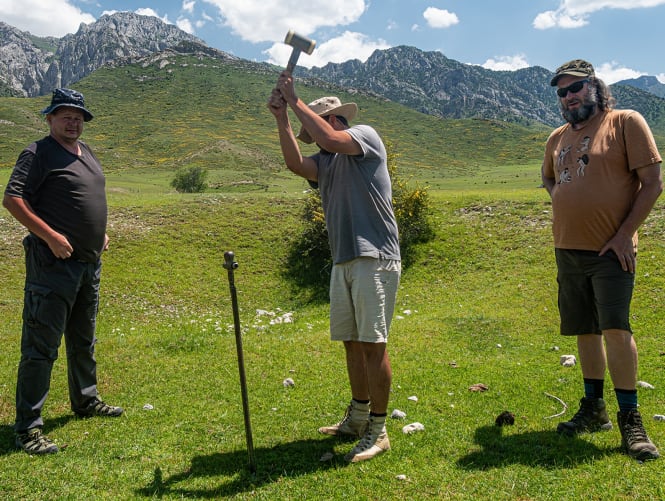
our team sampling the soil - palynologist, archaeologist, geologist 
geologist Aleš showing artefact 
Archaeologist Atilla with oven 
Atilla taking pictures of the landscape 
Goarchaeologist Lenka stading on the alluvial plain 
Archaeologist Dobo studying the waterwheel 
Etnobotanist as well as social antrhropologist Martina