Fertility Crisis: Who’s to blame?
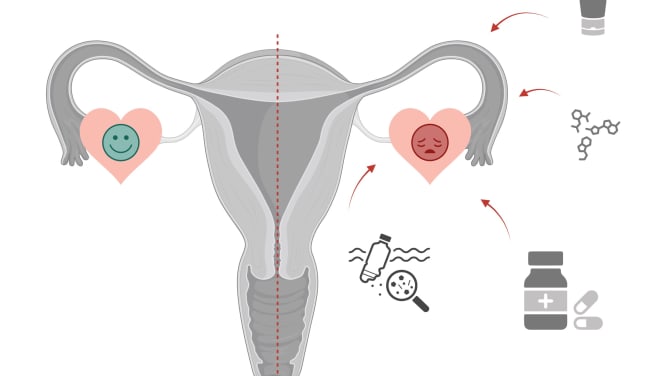
We all know someone who struggled to have children. And yet, we do not really understand why so many people are suffering from infertility. Each year, more than 6,500 Swiss couples turn to medically assisted reproduction (MAR). But this last resort solution is expensive and has a low success rate of less than 30%. Mothers having children later than ever is playing an important role, as well as increasing social inequalities and relationship behaviour, but could exposure to chemicals present in our environment also have a negative impact? Animal and epidemiological studies have shown that some molecules can disrupt essential mechanisms involved in the healthy development of germ cells (sperm and eggs), thereby contributing to declining fertility. Many of these compounds have been detected in different parts of the human body, including in reproductive organs. However, to date, no methodology exists to properly study their effects on the ovary. This critical gap limits our understanding of how environmental chemical exposure impacts women’s fertility. My goal is to change that
Protecting Female Fertility in a Chemical Age
My ambition is to test many environmental chemicals and study their impact on female fertility. I will generate critical data needed to fill a major knowledge gap by identifying biomarkers capable of detecting so-called «reprotoxic» substances. I will explore endocrine disruptors, micro- and nano-plastics, as well as pharmaceutical and cosmetic products. My aim is to develop an innovative methodology using human ovarian cells to enable large-scale testing in an approach that does not rely on any animal models, fully embracing the 3R principles (Replace, Reduce, Refine).
Your help could shape regulations
Your contributions through this crowdfunding campaign will finance a pilot project and generate preliminary results that will support the submission of a larger-scale proposal to the Swiss National Science Foundation (SNSF). Your support will increase my chances of securing funding for a project that will provide groundbreaking insights into how environmental chemicals affect fertility, and, ultimately, could contribute to regulate dangerous chemicals in Switzerland, but also globally. I want my research to influence policies in a promising step forward in protecting the reproductive health of future generations.