Shaping Space within Nature
by Laura Cristea, Madalina Dobre, and Ana Brebeanu
Culture between the fields
From my wide international experience as an architect, the time spent in Switzerland, in particular, sparked my interest in pursuing high-quality, thoughtful architecture. With the garden house in Bărdești, I wish to continue and develop this perspective, bringing it home, into a rural context that is deeply personal to me.
The proposed garden shelter in Bărdești sits near the city of Târgu Mureș, in the gentle, hilly landscape of Transylvania, a place that has been quietly shaped over the years by my mother’s care. For her, this land has long been a retreat from daily struggles. For me, it became the ground on which I could explore architecture as an intimate dialogue with nature and with the person who taught me to appreciate it, but also as a dialogue between tradition and newness. The project is special because it is, at its core, a collaboration with my mother and an attempt to translate our relationship to the place into a space that could also be enjoyed by other guests, bringing interest for culture in a primarily agrarian village.
Together, we imagined a small rural retreat that could also become a place for architectural and landscaping workshops for young architects, facilitating encounters between local and international culture. Our intention is to leave behind more than a building, but actually an architectural experiment, a cultural expression integrated within nature, located in an otherwise anonymous, unexpected place.
The building lot and its surroundings are primarily agricultural. The garden house in Bărdești also seeks to recreate a diverse, wild ecosystem with native plants, perennials, fruit trees, and berry shrubs, and to bring its interior spaces in harmony with nature.
From interactions with neighbors and authorities, the local village community is curious about this new type of architecture emerging in their area. They hope it will attract a new kind of attention and visitors, potentially boosting the local agrarian economy in a respectful way.
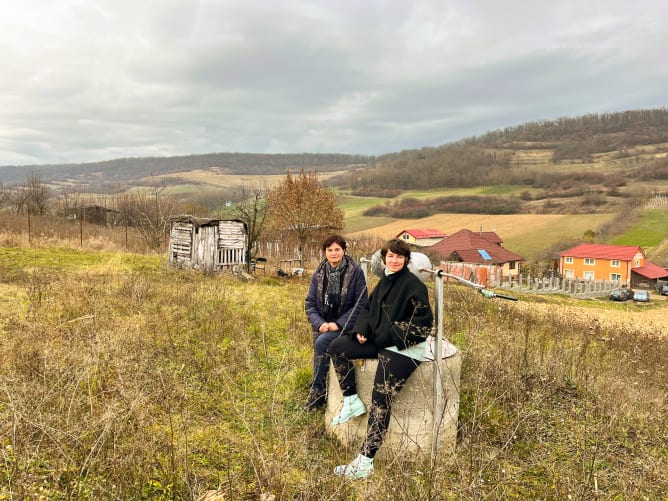
Me and my mother. 
The first act: building the water well as the center. 
View across the valley. 
Framing the view to the garden. 
Enjoying time in the garden. 
Strawberries from the garden. 
Hilly Transylvanian landscape. 
Rural stillness. 
Set at the peaceful outskirts of a small village, in an agrarian landscape.
An architectural experiment integrated within nature
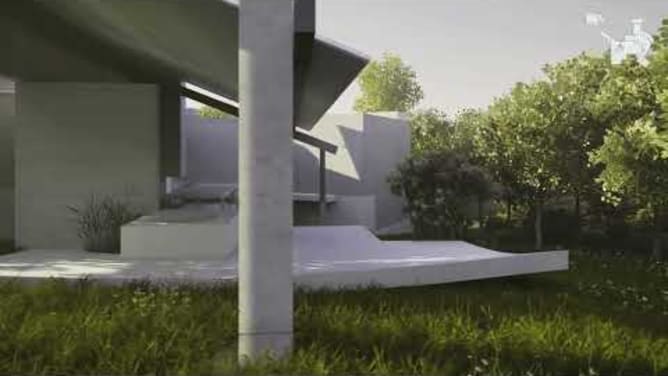
Despite its reduced insulated footprint of only 55 sqm, the future structure offers a rich spatial experience of architecture and nature. The garden is experienced in many different ways - by crossing it, by caring for it, by looking at its colours, by hearing its sounds or smelling its seasonal perfumes, by disconnecting from it and keeping it only in memories, by loosing orientation of the cardinal points, by physical and symbolical connections to the elements - the water, the fire, the sky, the strong light and the soft shadows.
The guests are invited to enjoy the surrounding garden from a covered outside space facing south, sitting by the fireplace. They can lose orientation walking along the curved, corridor-like living room, discovering a hidden sleeping niche open to the sky, or a bedroom with a distant view over the valley. The house is designed as a simple, solid structure: a concrete base in contact with the earth, and a timber-frame upper enclosure insulated with mineral wool. The timber is silver-stained to blend with the concrete, appearing as one structure. The house features only one glazed window and three small top-lights, the rest being non-glazed openings in wood, creating an intimate, dim-light inner atmosphere. Inspired by old Persian gardens, a central water well anchors the entire composition, and the building gently follows the natural slope of the land, avoiding any aggressive terrain manipulation.
The proposed project is a way of bringing respectful freshness into an otherwise anonymous and unexpected place, creating an experimental element of culture in the midst of agriculture, with a discreet intervention that celebrates nature at its core.

The 55 sqm house is built around a water well in a fruit tree garden. 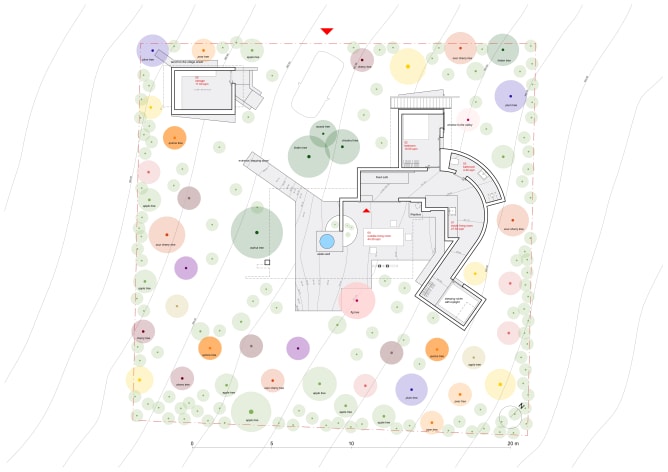
The central water well, as a source of life for the garden, anchors the entire composition. 
Entrance with stepping stone, going around the well to discover the spaces. 
The curved corridor-like living room, as a backbone of the house. 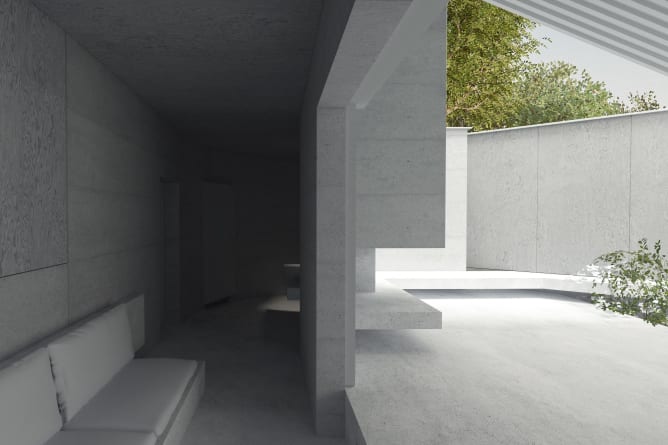
Blurring the line between the indoor and outdoor living rooms: inside sofa and outside sitting around fireplace. 
Gently following the natural slope. 
Framing the view to the garden. 
Hidden sleeping niche open to the sky. 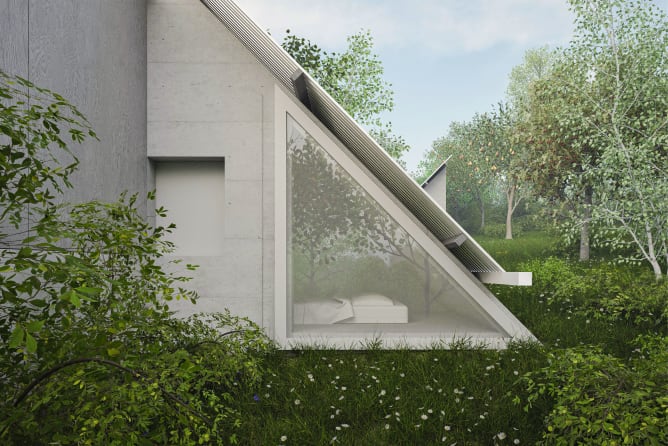
Bedroom with a distant view over the valley.
This is what I need backing for.
This project, which started several years ago, is a personal investment supported by my family, and serves as a learning and architectural experiment, as I believe that as architects we best learn by doing.
We have invested in the past years in securing the land and connecting it to essential utilities, building the water well, obtaining all necessary permits and in design work. The focus now is on completing the construction and beginning the transformation of the garden into a biodiverse, educational landscape centered on quality architecture.
Now, we are asking for partial support (about 50%) to help us move forward, while the remaining project costs will be covered by our own contribution. The funds will go toward the next essential stages of construction. Your support will contribute to materials and fair compensation for local labor for the following stages: infrastructure and the concrete base (around 40%), timber structure and insulation (around 50%) and 10% of the funds will be used to partially cover simple installations for water and electricity.
We estimate building to start summer 2026, with completion expected in spring 2027.

Me on the construction site of the House at the Black Sea, another experimental project, nearing completion. 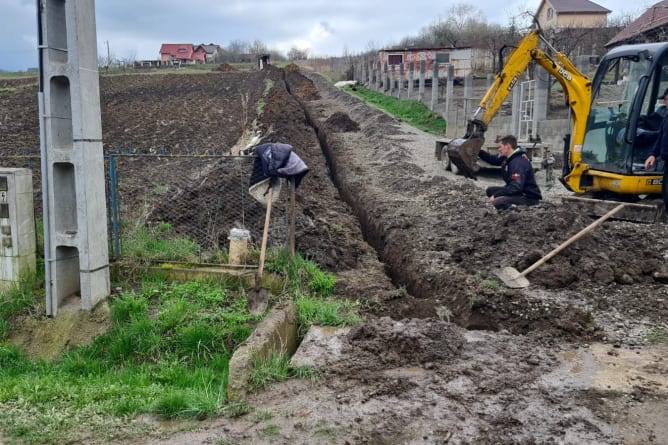
Utility installations for Garden house in Bardesti. 
Utility installations for Garden house in Bardesti.