WHAT THIS PROJECT IS ABOUT
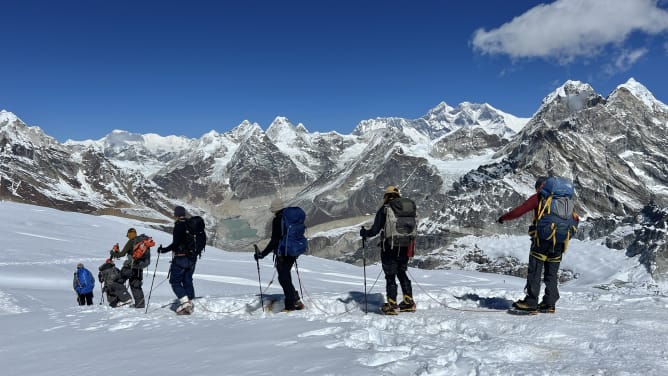
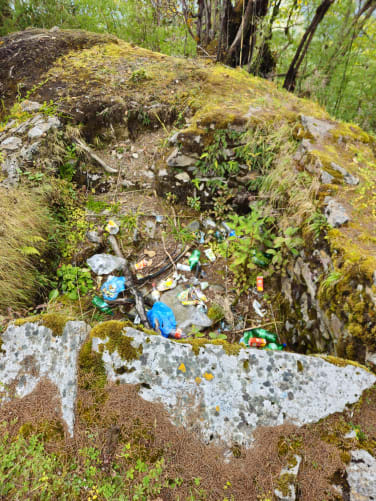
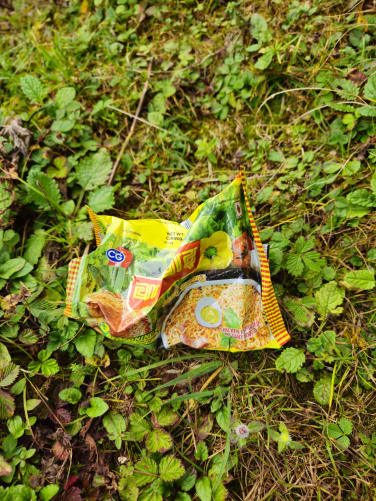
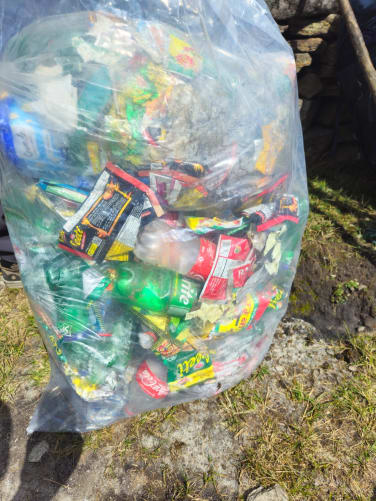
Mera Peak (6,476 m), located within Nepal’s Makalu-Barun National Park, attracts a growing number of trekkers and climbers from all over the world. While mountain tourism provides essential income for local communities, it also generates significant amounts of waste that accumulate along trekking trails, around lodges, and in villages, and is further disbursed down the mountain by wind, rain, snowmelt and flowing downriver.
In 2025, Mountain Synergies took part in an expedition in the Mera Peak region to explore some cleanup and awareness possibilities. Beyond collecting waste, the expedition revealed an important reality: the problem does not mainly originate at the summit. Most waste accumulates further down the valleys, in villages and along the trails used every day by trekkers, guides, porters, and local residents.
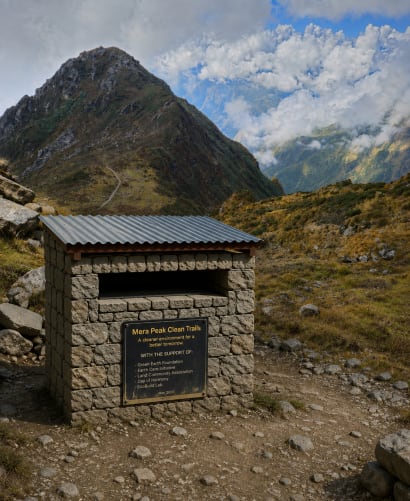
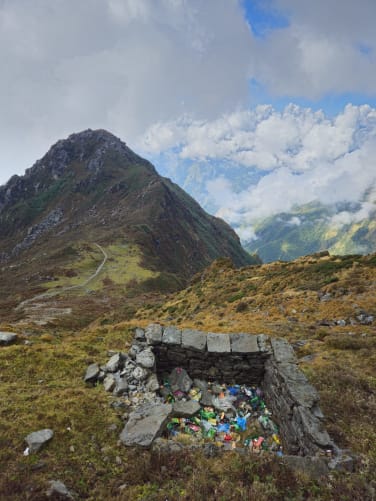
To address the issue at its source, we are launching the Mera Peak Clean Trails Initiative, a pilot initiative aimed at building several waste collection points along some of the region’s most frequently used trekking routes, at the feet of Mera Peak.
These collection structures will be simple, robust and adapted to the local environment. Built with locally available materials, they will be developed and managed in collaboration with local communities, tourism stakeholders, and the Makalu-Barun National Park authorities, they will provide trekkers and residents with a practical solution for responsible waste disposal along these trails.
Our goal is to test a concrete, scalable, and sustainable model that helps reduce pollution while promoting environmental awareness in one of the world’s most spectacular mountain ecosystems.
WHAT IS SPECIAL ABOUT OUR PROJECT
A) Addressing the problem at its source
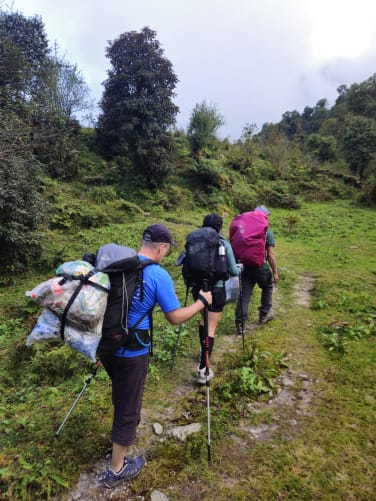
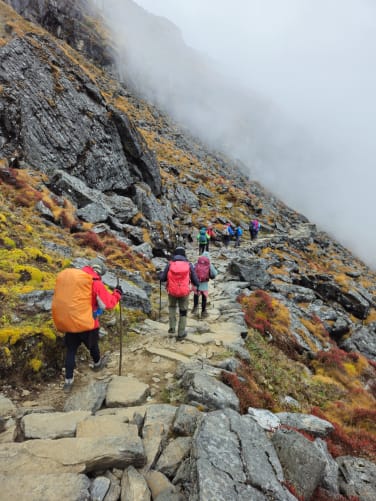
Instead of focusing exclusively on high-altitude cleanups, we target villages, rest areas, and trekking routes where waste accumulates daily. By creating accessible and visible collection points, we encourage better waste management practices from the start.
B) A collaborative approach with Local Stakeholders
Residents, lodge owners, guides, porters, local organizations, and park officials are at the heart of the project. Their involvement is essential to ensuring the initiative’s long-term viability and the maintenance of the infrastructure.
C) A scalable pilot project
The project plans to install between two and four trash collection points in areas identified as particularly affected by waste accumulation, including the Khare area. The lessons learned from this pilot phase will help determine how similar solutions can be implemented elsewhere in the Himalayas.
D) The Mountain Synergies vision
Mountain Synergies is a non-profit organisation dedicated to protecting mountain environments through practical action, awareness-raising, and collaborative solutions. Drawing on field experience in Nepal and strong local partnerships, the organization coordinates fundraising, implementation, monitoring, and reporting for the project.
–> Many environmental initiatives in mountain regions focus on one-time cleanup campaigns. While these efforts are valuable, they often address the symptoms rather than the causes of waste accumulation. Our project takes a different approach: we are working where waste is actually generated and discarded.
–> By supporting this initiative, you are helping preserve a unique Himalayan landscape while contributing to the development of a sustainable and locally adapted model for mountain waste management.
THIS IS WHAT WE NEED BACKING FOR
1) Building the first three waste collection points
–> Construction of the infrastructure
- Cement and construction materials
- Galvanized metal roofing
- Metal doors
- Informational and awareness plaques in Nepali and English
- Tools and equipment required for construction
–> Local workforce
- Employment of 5–7 local workers for approximately 20 days
- Transportation of materials to remote locations
- Accommodation and meals for the construction team
2) Waste management and transportation
- Establishment of a local waste collection system
- Coordination with local organizations and community partners
- Transportation of collected waste to appropriate disposal or treatment facilities
3) Long-term sustainability
- Collaboration with Makalu-Barun National Park authorities
- Awareness-raising among visitors and local residents
- Monitoring and evaluation of the pilot project to support future expansion