It all starts underground
We raise millions for animal rescue every year. We raise almost nothing for the soil that keeps them alive. Yet without living soil, there’s no grass, no trees, no food for anyone: not for antelope, not for elephants, and not for rhinos either.
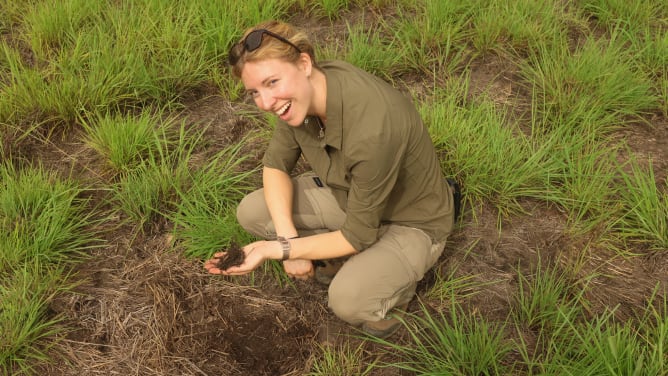
My name is Cecilia. I grew up just outside Vevey, in Switzerland. I studied agronomy, specifically soil science in agriculture, and I now work in soil conservation in Switzerland. I am currently pursuing further studies to specialize in tropical agroecology at the Czech University of Life Sciences in Prague. Soil is a bit of an obsession of mine: this invisible world beneath our feet that quietly shapes the health of everything living above it.
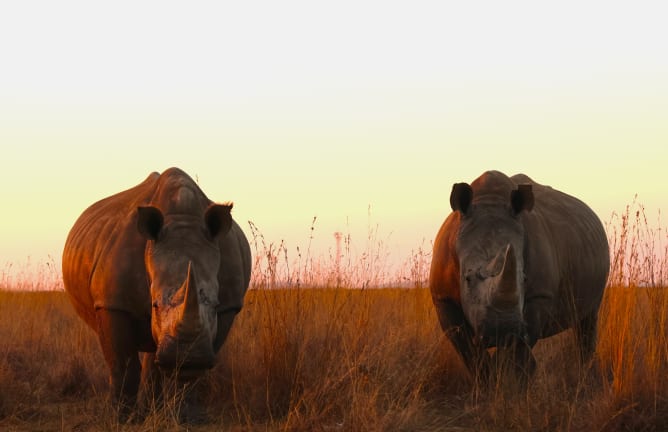
In a vast reserve in the Central African Republic, conservationists are preparing for something extraordinary: the return of the white rhino, decades after it disappeared from the landscape.
My master’s research looks at the very foundation of that comeback, the soil, to understand how the presence of large herbivores can help reshape an ecosystem from the ground up.
I need your help to get there and do the fieldwork.
Rhinos don't just live in an ecosystem. They help shape it.
The Chinko Conservation Area is a protected landscape in the Central African Republic roughly the size of Belgium. White rhinos once lived here, before poaching drove them to local extinction.
Their disappearance meant more than losing a species. These large herbivores influence the landscapes around them: they graze, trample vegetation, redistribute nutrients and alter how organic matter returns to the soil. Without them, other forces, including fire, play a much greater role in shaping the ecosystem.
Now, as Chinko prepares for the reintroduction of the white rhino, its conservation team is doing something fascinating: on experimental plots, they are cutting and mulching grass to mimic some of the effects that rhinos would naturally have on the landscape.
And that creates the question at the heart of my research: what happens underground? Does cutting and mulching vegetation help store more carbon in the soil than fire? How does it compare with simply leaving the land untouched?
That matters because soil carbon is one of the main indicators of soil health, nutrient cycling, water retention, and a landscape’s capacity to support life above ground.
Understanding the soil in these plots will help us better understand the ecological role of mega-herbivores, and what their return could mean for recovering landscapes.
The experiment extends beyond wildlife conservation. The three treatments (fire, cutting and mulching, and leaving vegetation untouched) echo different approaches to land management used around the world. The findings will contribute to a broader understanding of how we manage soil and ecosystems, from conservation areas in Africa to regenerative agriculture elsewhere, which is so important, especially in the context of climate change.
For me, this project has another dimension. Chinko is one of the least documented landscapes in Central Africa, and doing field research there is a rare opportunity to contribute data from an ecosystem we still know remarkably little about. I’m also proud to be doing this as a young woman in a field and region where women remain underrepresented.
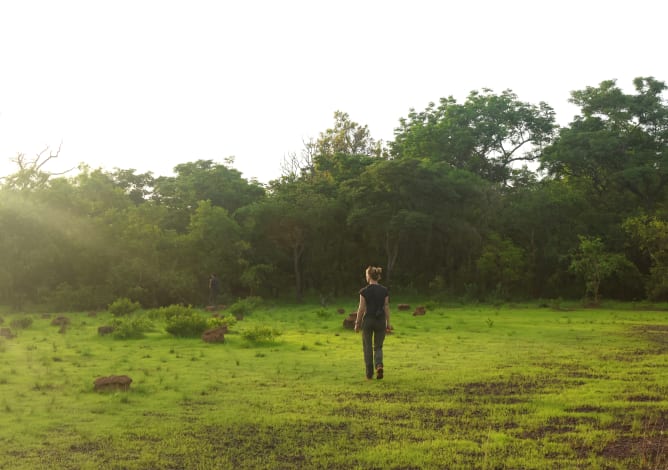
Discovering the parc (©Maxime Clément) 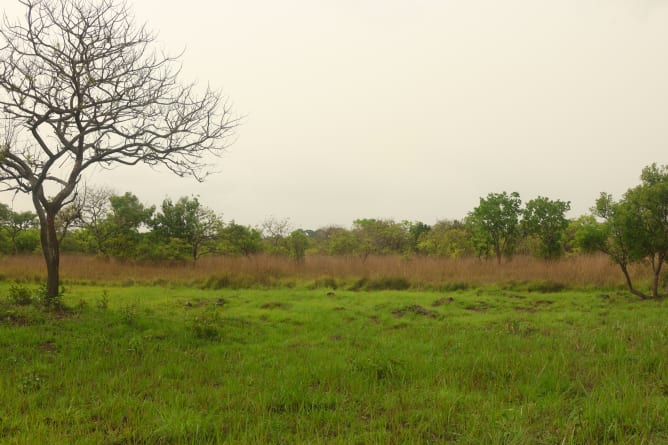
Plot cut and mulched, CAR (©Cecilia Guggisberg)
This is what I need backing for
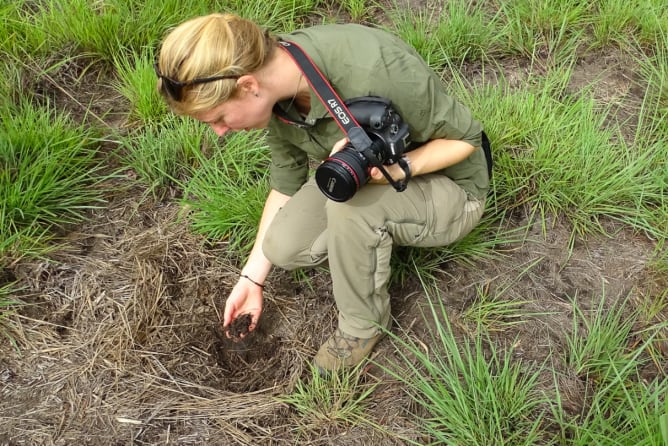
My departure is scheduled for the end of October, and I’ll be gone for about 5 months. Once I’m there, I will collect soil samples across 27 experimental plots, representing nine habitat-treatment combinations repeated three times. By sampling before and after the fire season, I can compare how the different treatments affect the carbon stored in the soil.
But I don’t want the research to end when my master’s thesis does.
While in Chinko, I will also train members of the local field team in a simple, repeatable soil-monitoring protocol. The aim is to leave behind not only samples and data, but also the capacity to continue monitoring these soils long after I leave.
My crowdfunding goal is CHF 9,500.
This will cover the costs required to make the fieldwork happen: travel all the way to Chinko, visa, accommodation in the field and soil-sampling equipment.
Every contribution brings me one step closer to Chinko, and brings us closer to understanding what happens beneath the surface as this extraordinary landscape prepares for the return of the magnificent white rhino.
And I want you to be part of the journey. I’ll share updates and photographs from the field so you can see where your support goes and follow the research as it happens.
The rhino’s return may be visible above ground. But part of its story begins beneath our feet.
Thank you for helping me uncover it.